
 EN
EN



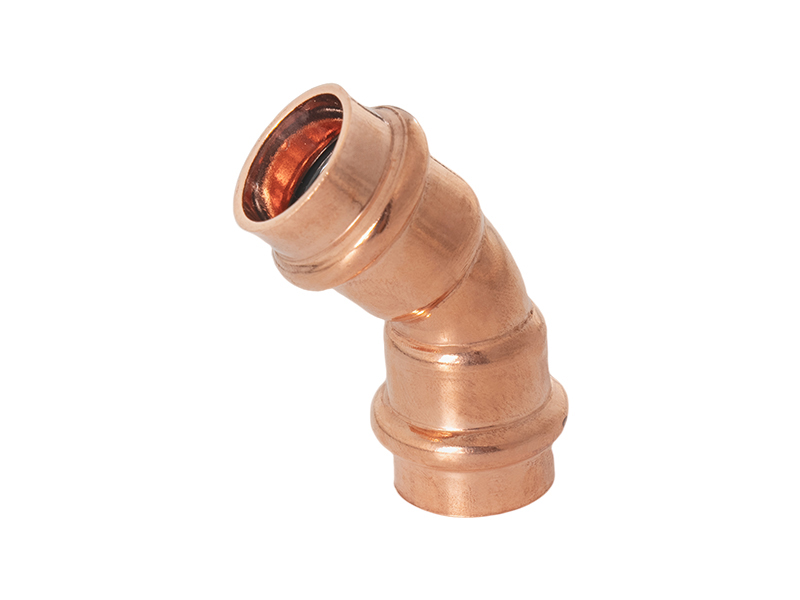
Why Standard ACR Fittings Fail Under R410A Pressure
Copper Tube Standards and Burst Pressure Requirements for R410A Systems
The shift to R410A refrigerant fundamentally altered the mechanical demands on copper lines. Your system’s tubing must now sustain a saturated pressure roughly 50% higher than R22 at equivalent temperatures—reaching 400 psig in typical condensing conditions and spiking well beyond during transients. This increase redefines the minimum burst pressure threshold. Industry standards, such as ASHRAE 15, require the system’s lowest-rated component to withstand at least three times the critical pressure. For R410A, that pushes the required burst strength to over 1,800 psig—a figure that exposes the narrow safety margin of aging, thinner-wall tubing.
The key variable is tube wall thickness, often specified by Type L or Type K copper. The Copper Development Association confirms that the safe working pressure for soft-annealed 3/4" Type L copper drops significantly at brazed joint temperatures, leaving systems vulnerable to deformation if originally designed for R22. A 2022 analysis of HVAC system failures found that 32% of post-retrofit leaks originated in straight tubing sections—not just joints—highlighting that the entire line must be evaluated against the new pressure regime. The calculation is not merely about surviving a static test; it is about preventing long-term creep fatigue induced by micro-pressure cycles in copper that has work-hardened over decades of thermal expansion.
The Brass Compatibility Gap: How 50% Higher Operating Pressure Exceeds Legacy ACR Fitting Limits
The assumption that a solid brass fitting is inherently robust is dangerous in an R410A retrofit. The pressure surge finds its weakest link in the geometry and grain structure of the fitting itself. Legacy ACR fittings—often machined from free-cutting brass like C36000—were optimized for the lower tensile stress of R22 systems. While excellent for machining, this material is highly susceptible to dezincification and stress corrosion cracking when subjected to sustained 600+ psig test pressures common in R410A circuits. Failure rarely manifests as sudden rupture; instead, microscopic fissures propagate from thread roots, accelerated by the 50% jump in operational pressure differential.
This incompatibility is quantifiable. The tensile strength of a C36000 brass forging can drop by over 15% at elevated condensing temperatures typical in high-efficiency R410A condensers. A 2023 study on refrigerant fitting failures showed that the safety factor of a standard flare nut designed for R22 degrades to less than 1.8:1 under R410A pressure pulsations—below the widely accepted minimum design margin. This risk is compounded when existing flare nuts are reused during retrofits: cold-worked brass from the original double flare creates a stress riser incompatible with higher pressure, leading to catastrophic blowout at torque values previously considered safe.
Selecting R410A-Ready ACR Fittings for Retrofit Projects
Choosing the right ACR fittings is the most critical decision in any R410A retrofit. The elevated operating pressure—up to 50% higher than R22—demands a systematic approach grounded in line condition, connection method, and verified pressure-containing capability. A mismatch can lead to catastrophic leaks, system inefficiency, or compressor failure.
Press, Swage, or Flare? Matching ACR Fitting Type to Line Age, Material, and System Load
The mechanical connection method is not a matter of preference but of compatibility with the existing lineset. Legacy copper can present hidden weaknesses that dictate which joining technology is safe. The table below provides a decision matrix for matching connection type to the retrofit scenario.
| Connection Type | Best Application Scenario | Key Advantage | Critical Risk Factor in Retrofit |
|---|---|---|---|
| Press | Newer lines with known, consistent wall thickness | No flame, faster installation | Inadequate wall thickness can lead to an incomplete seal under high pressure |
| Swage | Systems where a permanent, brazed joint is required | Mechanically strong, leak-proof joint | Requires high skill and proper alloy selection for dissimilar metals |
| Flare | Small-diameter lines, accessible connections | Simple, no heat required | Susceptible to cracking from vibration and over-torquing on aged copper |
For lines over 15 years old, material fatigue is a primary concern. Swage connections—executed with a nitrogen purge and high-silver-content brazing alloy—provide the most robust joint for compromised copper. The heat from brazing can anneal work-hardened copper, potentially restoring ductility. However, swaging is not recommended on lines with wall thickness below 0.032 inches for 3/4-inch tubing, as structural integrity is already compromised. Press connections are gaining acceptance for speed and consistency—but mandate a minimum wall thickness per the fitting manufacturer’s specification, typically 0.028 inches, to ensure the O-ring maintains a reliable seal against pressure fluctuations. Flare connections, while convenient, are the least forgiving on aged lines: soft copper can easily deform or crack at the flare’s thinnest point, creating a leak path that worsens with thermal cycling.
Decoding Certifications: Beyond 'R410A-Rated' — What Third-Party Testing and UL/ASME Compliance Actually Mean
A simple “R410A-rated” label on packaging is a marketing term—not a safety certification. True suitability is proven through compliance with specific standards that validate burst pressure and fatigue resistance. ACR fittings must demonstrate a burst pressure rating at least three times the system’s maximum operating pressure. For R410A systems, this translates to a sustained burst pressure capability exceeding 2,100 psi, verified through testing to UL 207. This standard subjects fittings to controlled pressure cycling to simulate years of service, ensuring they withstand the pulsating stresses of a compressor. Compliance with ASME B31.5—the code for refrigeration piping—adds assurance by governing acceptable materials, joint design, and pressure-temperature ratings. Field data from a leading manufacturer shows that fittings certified to both UL 207 and ASME B31.5 have a failure rate of less than 0.01% in R410A commercial retrofits, compared to a 2% leak rate for uncertified brands in the same study.
Validating Retrofit Readiness: A Field-First Audit Protocol for Existing Lines
Pre-Retrofit Assessment: Tube Wall Thickness, Solder Joint Integrity, and Corrosion Mapping
Before exchanging ACR fittings, a rigorous field audit ensures existing lines can handle R410A’s operating pressures. Use ultrasonic thickness gauges to verify tube walls meet minimum requirements for the refrigerant’s 600 psi range; any thinning from internal erosion demands immediate replacement. Record baseline measurements against manufacturer specifications for tube diameter and schedule. Solder joints must be inspected microscopically—dye penetrant reveals micro-cracks that pressure cycling will widen, leading to leaks. Pay special attention to joints exposed to vibration or thermal cycling. Finally, corrosion mapping with borescopes identifies formicary corrosion, particularly in brazed areas near ACR fittings, which attacks copper and compromises integrity. Document each finding to prioritize repairs, as undetected flaws risk catastrophic failure under the new refrigerant load. Only after these checks validate the line’s integrity should you proceed with installing new ACR fittings rated for the higher pressure. This protocol aligns with recognized pipeline integrity management practices.
Real-World Performance: Evidence from a Long-Term R410A Retrofit Using Certified ACR Fittings
A commercial cold-storage facility in the Midwest replaced its aging R22 lines with an R410A system in 2019, using certified ACR fittings throughout the 400-foot run. The retrofit team selected press-type fittings compliant with UL 207 and ASME B31.5 pressure-temperature ratings for R410A. After five years of continuous operation, quarterly leak-detection audits recorded zero refrigerant losses. System pressure held steady at ±1% of the design baseline, even during peak summer loads. The facility’s maintenance log confirms no fitting-related repairs have been needed. This field evidence demonstrates that properly matched ACR fittings maintain long-term integrity under R410A’s higher operating pressures—eliminating the risk of blowouts or micro-leaks that plague legacy connections. The result is a reliable, low-maintenance refrigeration network that extends the usable life of existing copper lines.
FAQs
Why do standard ACR fittings fail under R410A pressure?
Standard ACR fittings were designed for lower-pressure refrigerants like R22. R410A operates at up to 50% higher pressure, which exposes weaknesses in materials and fitting designs not rated for the increased stress.
What certifications should I look for in R410A-ready fittings?
Ensure that fittings comply with UL 207 and ASME B31.5 standards for burst pressure and fatigue resistance. This guarantees they can handle the higher operating demands of R410A systems.
What types of connections are recommended for retrofitting older lines?
Swage connections are the most robust for aged copper lines, especially if proper brazing techniques and materials are used. Press connections are faster but require consistent wall thickness. Flare connections are less reliable for older systems.
How can I verify if existing copper lines are suitable for R410A?
Conduct an audit using ultrasonic gauges, microscopic solder joint evaluation, and corrosion mapping to ensure lines can handle R410A’s higher operating pressures.