
 EN
EN



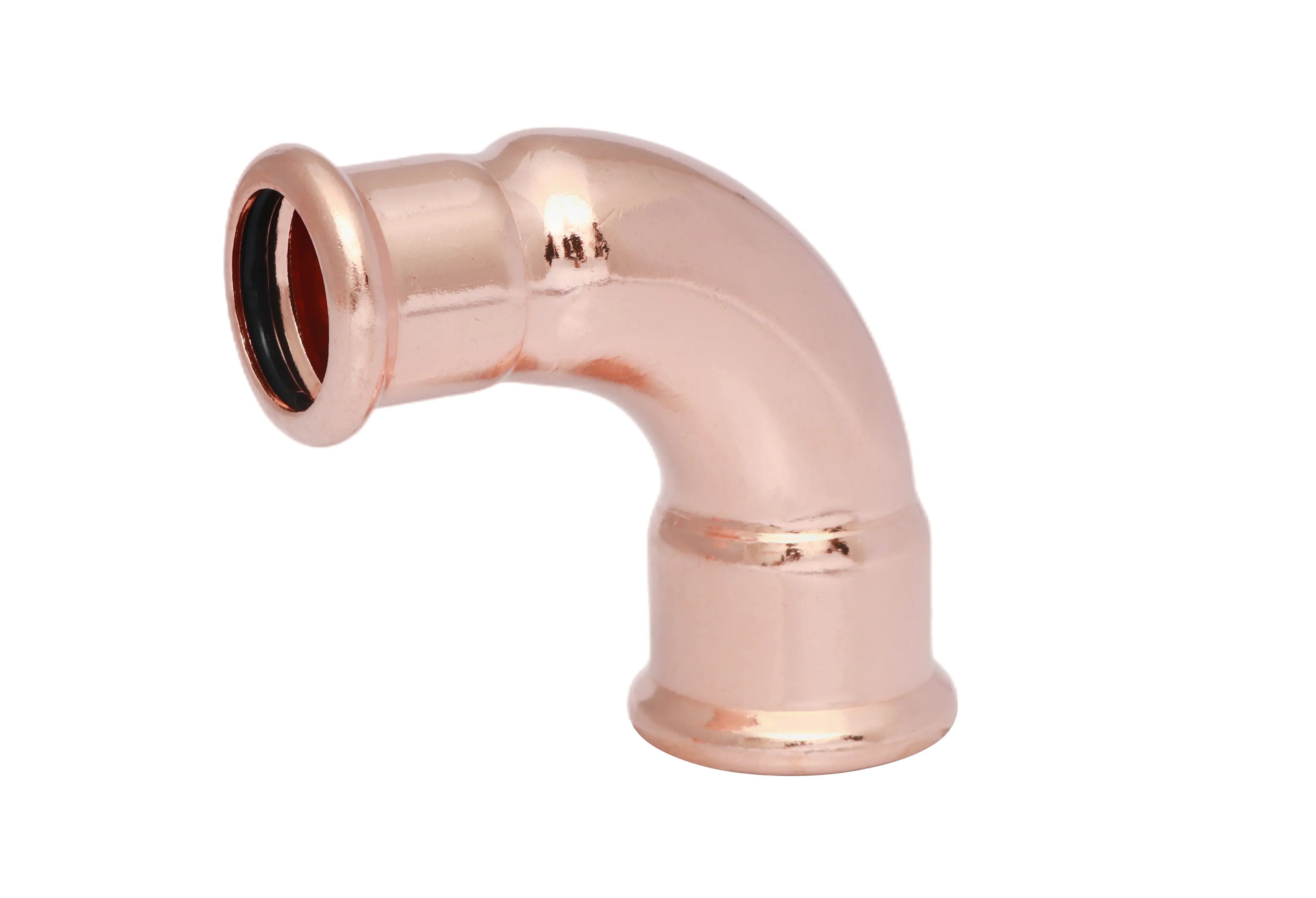
Installation Efficiency: Speed, Tools, and Labor Impact of Copper Fittings
Time-to-completion comparison: residential copper runs with soldered vs. push-fit copper fittings
The joining method directly governs how quickly a residential plumbing project advances. Soldered connections require a multi-step sequence—cut, clean, flux, heat, apply solder, cool, wipe, and inspect—with each joint individually heated using an open flame. This demands constant attention to avoid overheating adjacent seals or igniting combustibles in finished walls. Push-fit copper fittings eliminate thermal steps entirely: the pipe end needs only a square cut, deburring, and full insertion to the marked depth—a process completed in seconds per connection.
For a typical residential water line with 10 connections, a skilled plumber may spend 2–3 hours on soldering—including measurement, preparation, heating, cooling, and cleanup. The same run using push-fit copper fittings is often completed in 45–60 minutes. There’s no waiting for joints to cool, no flux residue to remove, and no risk of thermal damage to surrounding materials. This time advantage scales meaningfully with project size—especially valuable in occupied homes where minimizing disruption is critical.
Tooling investment and skill curve: torches/flux vs. insertion tools and calibration requirements
Soldering requires a propane or MAPP gas torch, flux, wire brushes, emery cloth, solder, and flame-resistant PPE. Its steep learning curve means novices commonly produce cold joints, leaks, or fire hazards—requiring months of supervised practice. Even experienced technicians must maintain strict vigilance over flame placement and heat duration.
Push-fit copper fittings dramatically reduce both tooling and training burdens. A basic kit—tube cutter, deburring tool, and depth gauge (often built into the fitting)—is sufficient. With no open flame, flux, or high temperatures involved, the skill barrier drops significantly. While proper installation still requires clean, square cuts and full seating—many systems provide visual or tactile confirmation—the onboarding period shortens from weeks to hours. This accelerates crew readiness and cuts tooling costs by up to 70% compared to a full soldering setup, making push-fit copper fittings especially practical for maintenance teams and DIY-oriented installers.
Reliability and Leak Resistance of Copper Fittings Under Real-World Conditions
Long-term performance hinges on how well copper fittings retain integrity under pressure, temperature swings, and mechanical stress. Certified lab testing and decades of field use reveal clear distinctions between soldered and push-fit connections.
Certified Performance vs. Field Evidence: ASSE 1061 Data and Long-Term Service History of Copper Fittings
ASSE 1061 certification mandates rigorous validation for push-fit copper fittings—including sustained pressure testing at 200 psi and 200°F, a minimum burst pressure of 1,000 psi, and repeated thermal cycling (ASSE 2021). These standards ensure consistent, factory-controlled sealing independent of installer technique. Field data aligns closely: push-fit systems installed per manufacturer instructions show leak rates below 0.1% in long-term monitoring (industry installation audits, 2023). Their dual-seal design—stainless steel grab ring plus EPDM O-ring—delivers repeatable, inspection-free joints resistant to blow-off and slow seepage.
Soldered joints can exceed 50 years of service life when executed flawlessly—but their reliability is highly dependent on installer skill. Improper heat application, insufficient cleaning, or inadequate solder fill are leading causes of premature failure in soldered copper fittings (Plumbing Failure Survey, 2022). Push-fit designs eliminate these variables entirely.
Thermal Cycling and Vibration Resilience: Why Push-Fit Copper Fittings Excel in Dynamic Environments
Push-fit copper fittings outperform soldered connections in systems subject to frequent thermal expansion, contraction, or mechanical vibration. The internal O-ring and movable stainless steel grab ring allow slight axial movement, absorbing stress without compromising seal integrity. Accelerated lifecycle testing shows push-fit fittings withstand over 10,000 thermal cycles from −40°F to 200°F without leakage (manufacturer data, 2022)—well beyond typical domestic hot-water or hydronic heating demands.
In contrast, the rigid crystalline structure of a soldered joint is vulnerable to cracking or fatigue under dynamic loads. Vibration from pumps, compressors, or water hammer intensifies this risk, often initiating stress fractures at the solder–copper interface. Push-fit technology’s ability to dampen vibration and accommodate thermal movement makes it the superior choice for applications with frequent temperature shifts or continuous mechanical agitation.
Pipe Compatibility and Physical Constraints for Copper Fittings
OD tolerance and ovality sensitivity: impact on grip integrity of push-fit copper fittings vs. solder joint consistency
Pipe dimensional accuracy directly affects joint integrity. ASTM B88 specifies outside diameter (OD) tolerance of ±0.002 in. and ovality within half that. Push-fit gripping rings rely on precise OD for mechanical lock; undersized pipe or ovality exceeding 0.002 in. can compromise grip and lead to blow-off. Most push-fit manufacturers reject ovality greater than 0.002 inches for ½-inch tube, whereas soldered assemblies tolerate up to 0.005 inches before capillary flow is impaired. Soldered joints depend on a uniform annular gap for proper solder fill—ovality disrupts flow and creates voids. While solder tolerates minor shape deviations, push-fit fittings demand strict adherence to OD and roundness specifications to ensure reliable sealing. Always verify pipe dimensions with a caliper before installation.
Application-Specific Suitability of Copper Fittings
Retrofit and confined-space advantages: fire safety, no open flame, and spatial efficiency of push-fit copper fittings
Push-fit copper fittings resolve two major constraints in renovation work: fire safety and spatial access. Eliminating the need for a soldering torch removes open-flame hazards, negating hot work permits and lowering insurance liability in occupied buildings. This flameless method enables safe repairs inside finished walls, crawl spaces, and near combustible materials—locations where open-flame work would be prohibited or impractical. Compact tooling—often just a deburring tool and insertion gauge—allows one-handed operation in tight cabinet voids or behind bathtubs, where torch maneuverability is impossible. A 2023 field survey of retrofitting plumbing teams found push-fit connections halved average joint installation time in confined-access areas versus soldered joints (Plumbing Efficiency Study). Additionally, many push-fit fittings allow post-installation rotation, simplifying alignment in tight corners without stressing the copper pipe.
New construction and high-reliability contexts: where traditional soldered copper fittings remain preferred
In large-scale new construction, soldered copper fittings continue to offer unmatched long-term stability. A properly executed soldered joint forms a homogeneous metal bond that resists creep and micro-leakage for decades—documented installations from the 1970s remain fully functional today. High-temperature domestic hot-water loops and hydronic heating systems operating above 180°F present challenges for some push-fit O-rings, which may gradually lose elasticity under sustained thermal stress. Soldered assemblies also deliver lower material cost per joint at scale, as new-build projects typically have ready access to trained labor and benefit from bulk purchasing. In seismic zones, the rigid, leak-free nature of correctly soldered copper provides predictable joint strength—without reliance on internal grab rings that could loosen over thousands of thermal cycles. For these reasons, the century-long track record and proven resilience of soldered copper make it the conservative, code-preferred choice in high-reliability and mission-critical applications.
FAQ
What are the time-saving advantages of push-fit copper fittings compared to soldered connections?
Push-fit copper fittings can complete connections in seconds, while soldering typically requires minutes per joint due to the need for heating, cooling, and cleanup. For a residential water line with 10 connections, push-fit can save over an hour compared to soldered fittings.
Do push-fit copper fittings require specialized tools or training?
No specialized tools are necessary for push-fit fittings. A basic setup like a tube cutter, deburring tool, and depth gauge suffices. The learning curve is also much shorter compared to soldering, which demands torch handling and specialized techniques over a longer training period.
How do push-fit copper fittings perform under frequent thermal cycling and vibration?
Push-fit fittings excel in dynamic environments due to their internal O-ring and stainless steel grab ring, which allow axial movement without compromising seal integrity. They endure over 10,000 thermal cycles ranging from −40°F to 200°F.
Are there spatial advantages to using push-fit copper fittings in confined areas?
Yes, push-fit fittings eliminate the need for an open flame, making them safer and more convenient for confined spaces, such as inside walls or near combustible materials. Their compact tooling allows for one-handed operations in tight spots.
When are soldered copper fittings preferable over push-fit fittings?
Soldered fittings are ideal for large-scale new construction projects, high-temperature systems, or seismic zones where long-term reliability and cost efficiency at scale are critical.
Table of Contents
- Installation Efficiency: Speed, Tools, and Labor Impact of Copper Fittings
- Reliability and Leak Resistance of Copper Fittings Under Real-World Conditions
- Pipe Compatibility and Physical Constraints for Copper Fittings
- Application-Specific Suitability of Copper Fittings
-
FAQ
- What are the time-saving advantages of push-fit copper fittings compared to soldered connections?
- Do push-fit copper fittings require specialized tools or training?
- How do push-fit copper fittings perform under frequent thermal cycling and vibration?
- Are there spatial advantages to using push-fit copper fittings in confined areas?
- When are soldered copper fittings preferable over push-fit fittings?