EN
EN



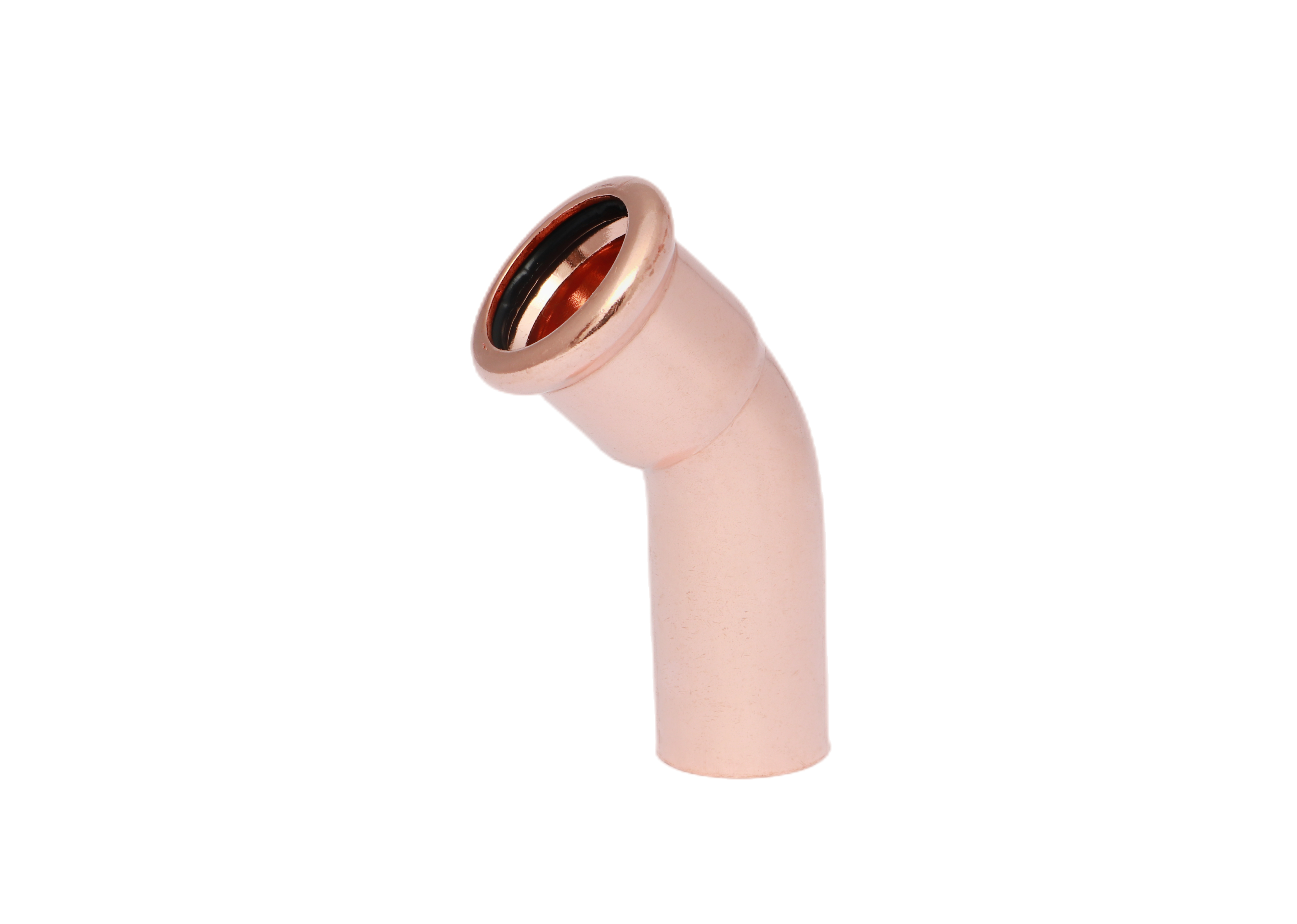
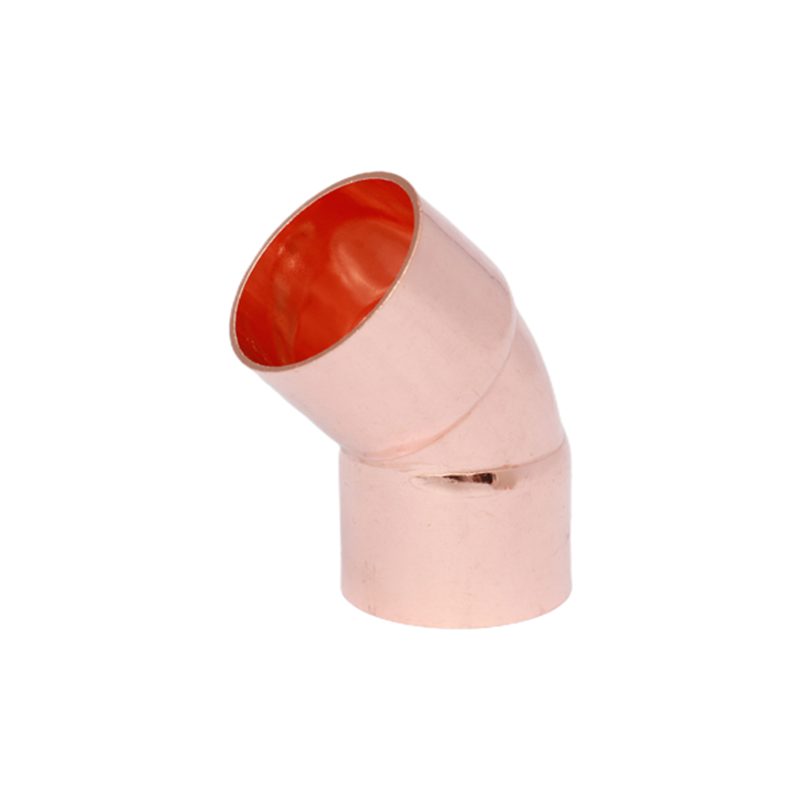
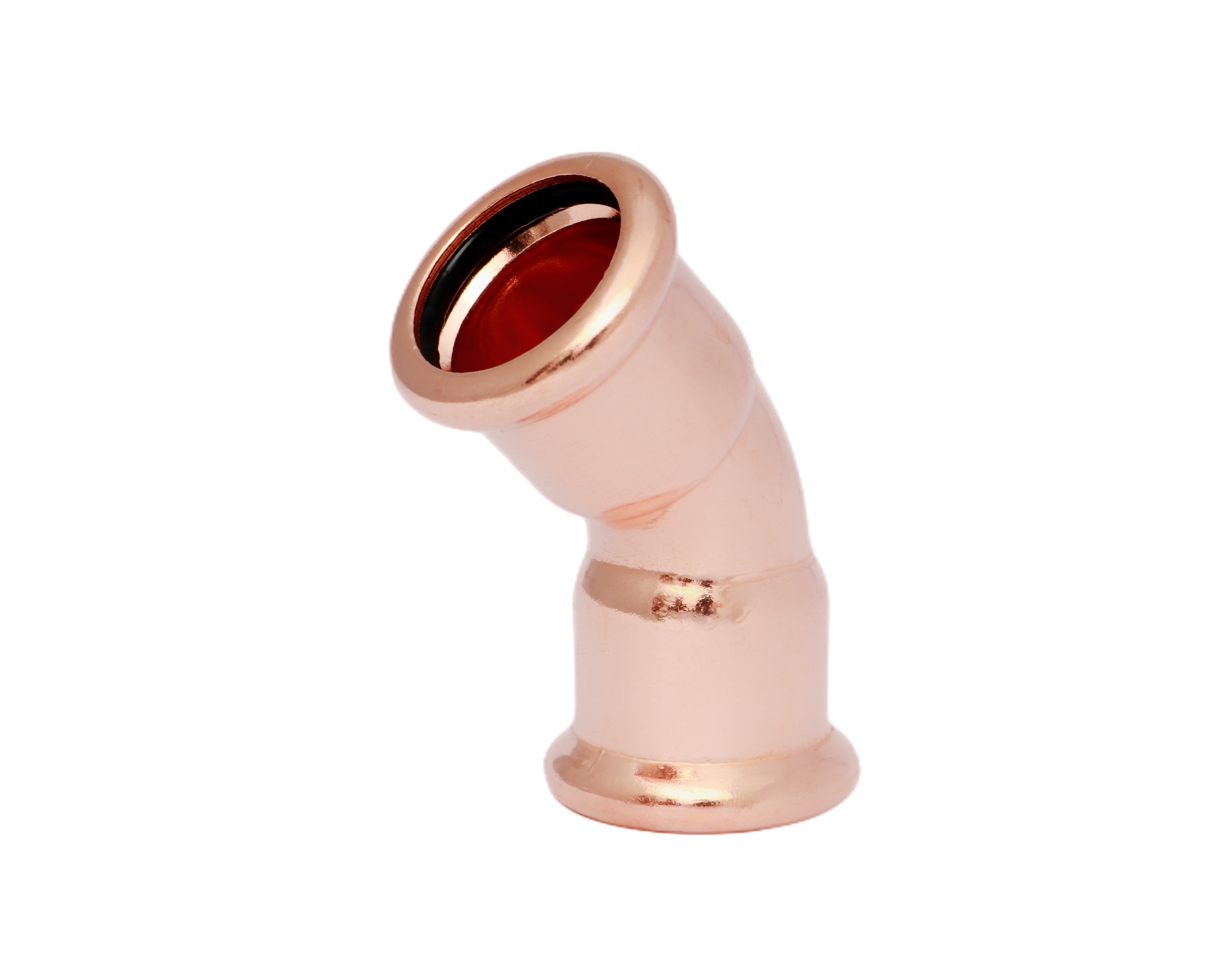
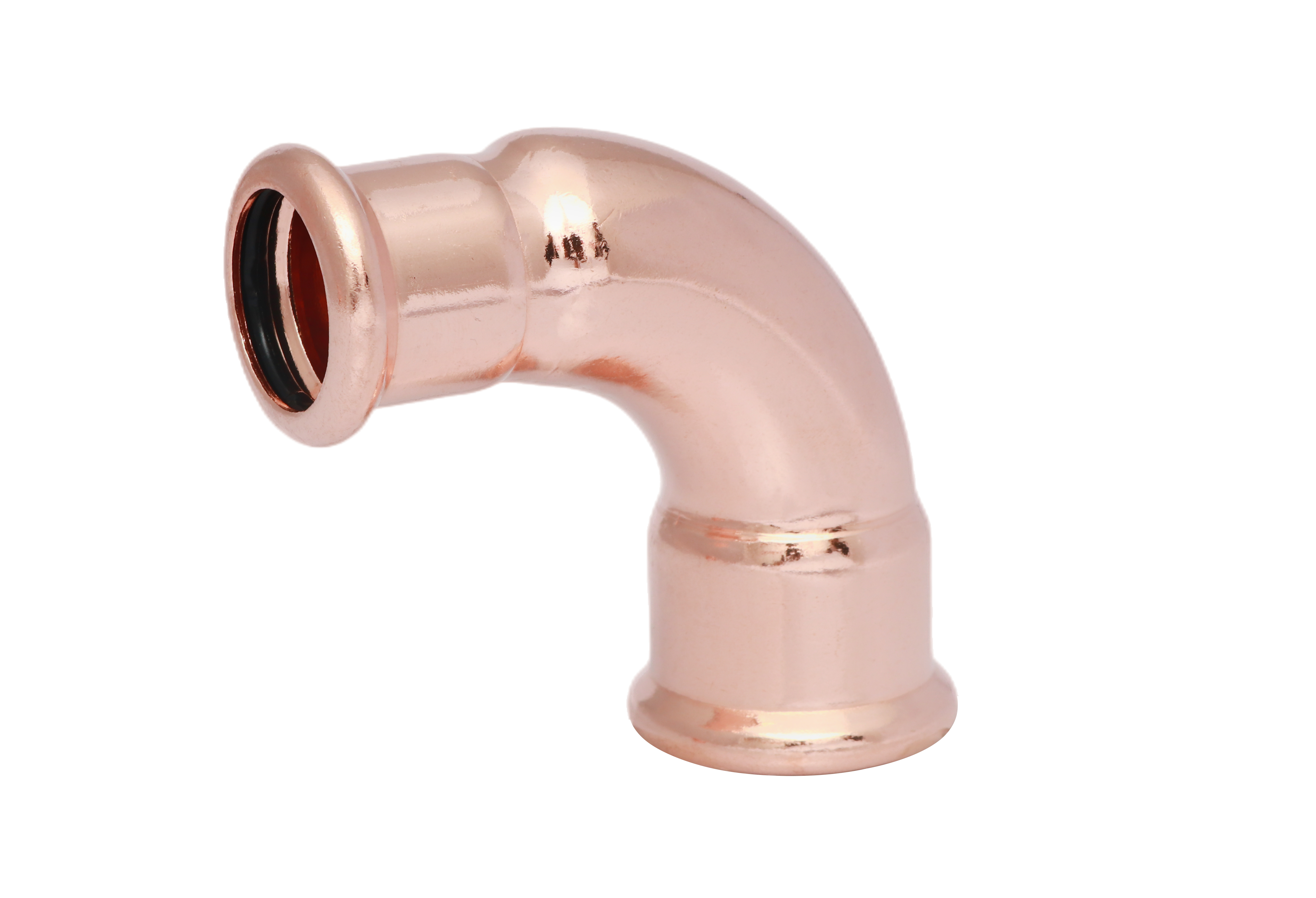
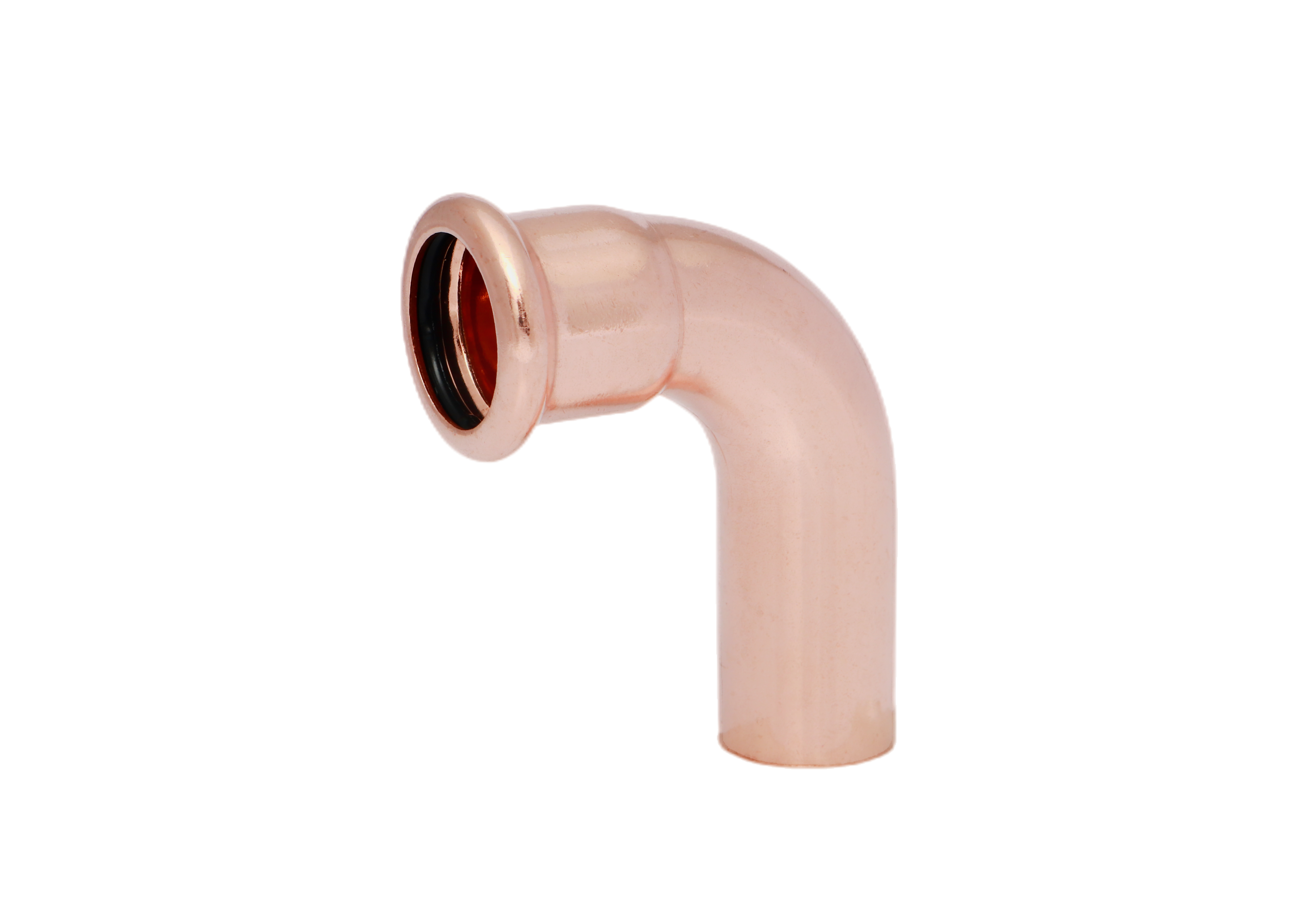
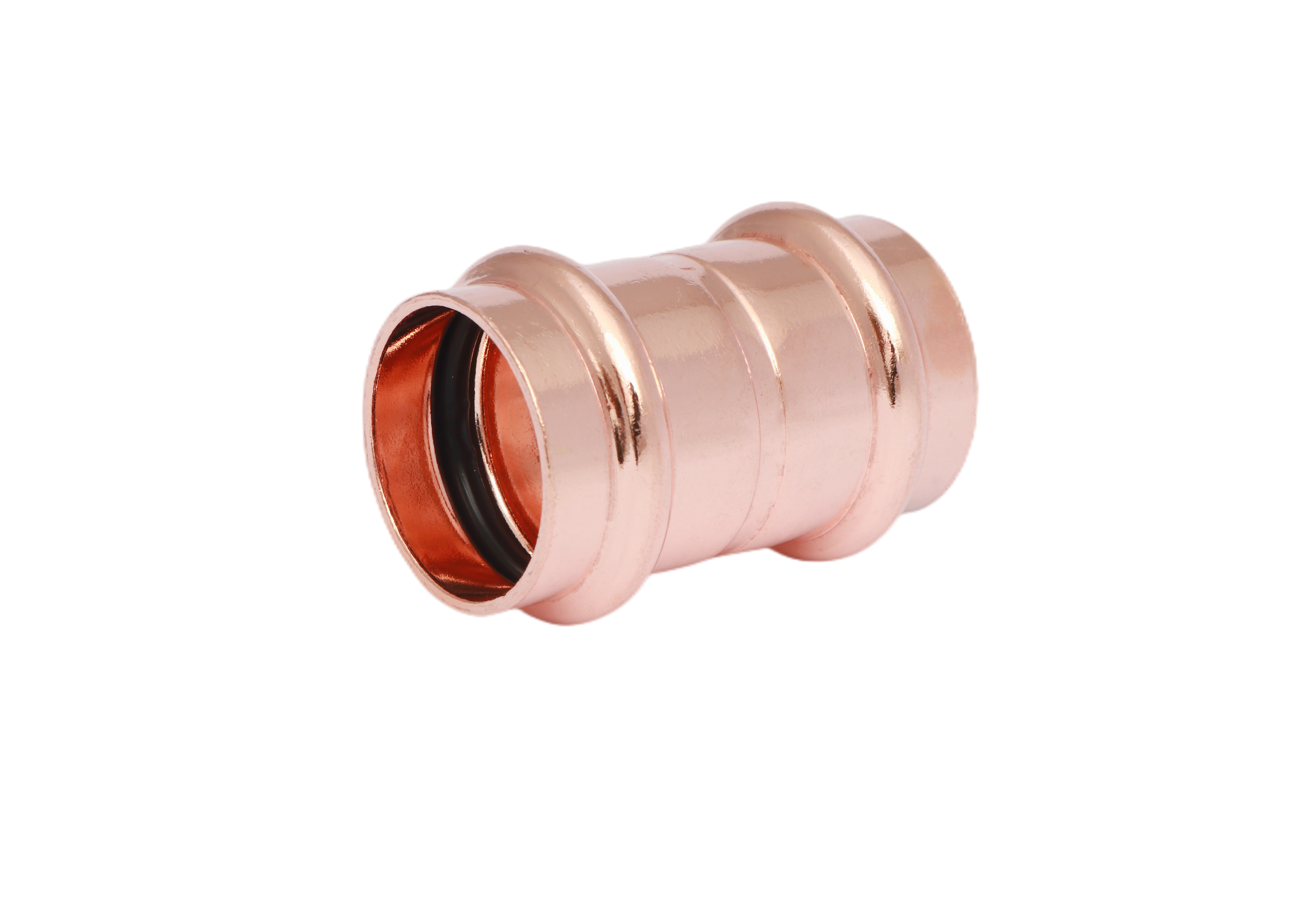
Copper press fitting with M profile-45° street elbow ftg x C
Discover our high-performance copper press fittings for reliable plumbing and piping. Our press connection system offers fast, leak-proof installation for copper tubes in water, heating, and air applications. View technical specs and dimensions.
-Material: Copper Alloy (CW602N)
-Sealing Element : EPDM O-ring
-Certifications : WRAS Approved
- Overview
- Recommended Products
Overview
Copper press fittings are a modern breakthrough in piping connection technology, designed to deliver exceptional efficiency, safety, and long-term reliability in contemporary plumbing and HVAC systems. They provide a practical alternative to traditional soldered or welded joints by enabling fast, cold-formed connections that require minimal tools and no thermal work. This makes them particularly valuable in projects where time efficiency and installation safety are critical priorities.
The system is built around a precision-engineered fitting body combined with a high-performance sealing mechanism, typically an EPDM O-ring, which ensures a stable and watertight seal. During installation, a specialized press tool applies controlled radial compression to the fitting, permanently shaping it around the inserted copper tube. This mechanical deformation locks the pipe securely in place while activating the internal sealing element, resulting in a joint that is both structurally strong and resistant to leakage over time.
Copper press fittings are widely adopted across a diverse range of applications due to their versatility and consistent performance. They are commonly used in potable water distribution systems, where hygiene and safety are essential. In hydronic heating systems, they help maintain stable thermal circulation and efficient energy transfer. They are also suitable for chilled water networks and compressed air systems, where airtight performance and pressure resistance are required. Their adaptability allows them to be used effectively in residential buildings, commercial complexes, and industrial facilities.
Another key advantage of this technology is the significant improvement in workplace safety. Since no open flame, solder, or flux is required, installation can be carried out without hot work permits, reducing regulatory complexity and fire risk. This makes the system especially suitable for sensitive environments such as hospitals, hotels, and occupied buildings. Combined with fast installation, reduced labor requirements, and long service life, copper press fittings offer a reliable and cost-effective solution for modern piping infrastructure.
Key Features & Benefits
Copper press fitting technology delivers a highly efficient and modern solution for copper piping systems, combining installation speed, operational safety, and long-term reliability into a single integrated method. It is widely adopted in professional plumbing and mechanical installations where performance consistency and reduced construction time are essential.
One of its primary advantages is extremely fast installation performance. Using a calibrated press tool, each connection can be completed in under 10 seconds. This rapid assembly process significantly reduces on-site labor requirements and allows technicians to complete large piping networks more efficiently. The result is improved workflow management and faster project delivery timelines, especially in large-scale construction environments.
Another major benefit is its flame-free installation process, which eliminates the need for soldering, brazing, or any heat-based work. Because no open flame is involved, the system does not require hot work permits, simplifying compliance procedures and reducing administrative burden. This also enhances job site safety, making it suitable for use in occupied buildings, healthcare facilities, educational institutions, and other environments where fire risk must be strictly controlled.
The system also ensures excellent sealing reliability and durability. Each pressed joint forms a permanent mechanical connection that resists vibration, pressure changes, and thermal movement. This robust structure minimizes the risk of leakage and ensures stable performance throughout the entire service life of the piping system, reducing maintenance needs and increasing overall system dependability.
In addition, copper press fittings offer wide compatibility and application flexibility. They are designed for use with both hard-drawn (rigid) and soft (annealed) copper tubes and comply with international standards such as ASTM B88 and EN 1057. This ensures consistent installation quality across different engineering specifications and global project requirements.
Finally, the system is highly cost-efficient. By eliminating hot work procedures, reducing labor time, and minimizing insurance and downtime costs, copper press fittings significantly lower overall project expenses while improving installation speed and safety performance.
Technical Specifications
Parameter |
Specification |
Material |
Copper Alloy (CW602N) |
Sealing Element |
EPDM O-ring |
Sealing Material Temp. Range |
-20°C to +110°C |
Operating Pressure |
Max 16 Bar |
Standards |
AS3688,EN1057 |
Size Range |
15mm-54mm |
Certifications |
WRAS Approved |
Connection Method |
Cold press using a calibrated jaw tool |
Installation Guide
The installation procedure for copper press fittings is a precise, standardized sequence designed to ensure maximum joint reliability, sealing performance, and long-term system durability. Each step plays an important role in achieving a secure, professional-grade connection suitable for plumbing, HVAC, and mechanical piping systems.
The process begins with accurate tube cutting. The copper pipe must be cut using a dedicated tube cutter to achieve a perfectly straight and square end face. A clean cut is essential because it ensures correct alignment inside the fitting and allows the pipe to engage evenly with the internal sealing components during installation.
The next step is edge preparation and deburring. After cutting, all internal and external burrs must be completely removed. This is critical because sharp edges or residual metal fragments can damage the sealing O-ring or obstruct full pipe insertion. A smooth, properly finished pipe end guarantees optimal sealing conditions and prevents future leakage risks.
Following this is insertion depth marking. The installer measures and marks the required insertion depth based on the fitting specification. This reference mark ensures the pipe is fully inserted into the fitting body, providing visual confirmation of correct positioning before pressing.
The fourth step is pipe insertion into the fitting. The copper tube is pushed firmly and evenly into the fitting until it reaches the internal stop. This ensures complete engagement with the sealing system and establishes the correct mechanical positioning for pressing.
Next is the pressing operation. The press tool is carefully aligned over the fitting and activated. The tool applies controlled radial force, permanently deforming the fitting around the pipe and compressing the internal sealing element to form a strong, leak-resistant joint.
Finally, post-press inspection is performed. Most fittings feature a visible deformation indicator that confirms a successful press. This quality check ensures the connection meets installation standards before the system is put into service.