EN
EN



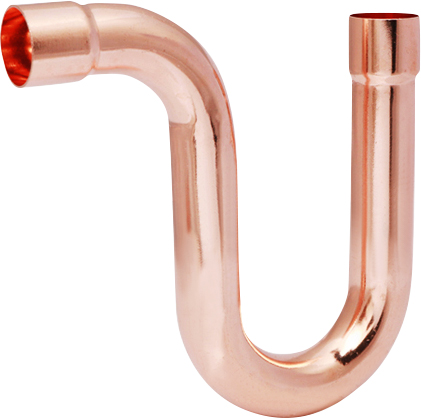
Suctionline P-TRAP CXC
The Suction Line P-Trap is a pre-fabricated copper piping component . It is installed in the suction line of refrigeration and air conditioning systems to facilitate oil return to the compressor, preventing oil logging in the evaporator and ensuring efficient system operation.
-Material: Durable wrought copper (typically DHP copper / Alloy C12200)
-Code: BM5018(ASME B16.22)
-Standards Compliance: ASME B16.22
- Overview
- Recommended Products
Overview
In modern refrigeration and air conditioning systems, efficient oil management is a critical factor that directly affects system reliability, compressor lifespan, and overall operational stability. Within a closed-loop refrigeration cycle, compressor oil is continuously circulated together with the refrigerant gas to lubricate moving components such as pistons, scrolls, or rotors inside the compressor. However, under certain operating conditions—especially in vertical suction risers—this oil can become separated from the refrigerant stream.
When the velocity of refrigerant gas in the vertical suction line is too low, it loses the ability to carry oil droplets upward. As a result, the oil begins to accumulate at low points in the piping system instead of returning to the compressor. Over time, this accumulation can cause partial or complete blockage of the suction line. More critically, the compressor may suffer from oil starvation, which leads to insufficient lubrication, increased mechanical friction, overheating, and ultimately severe compressor damage or failure.
To address this engineering challenge, refrigeration systems commonly incorporate a component known as a P-Trap in vertical suction risers. The P-Trap is a specially shaped section of piping installed at the base of the vertical rise. Its primary function is to manage oil return effectively and ensure continuous lubrication of the compressor under varying load conditions.
Oil Return Mechanism and Working Principle
The working principle of the P-Trap is based on controlled fluid dynamics and gas velocity management. As refrigerant gas mixed with oil enters the trap, the geometry of the P-shaped bend causes a localized change in flow direction and velocity. This sudden change generates turbulence within the refrigerant stream. The turbulent flow helps re-entrain accumulated oil and mix it back into the refrigerant gas.
Once re-entrained, the high-velocity gas flow in the vertical riser lifts the oil upward along with the refrigerant. This ensures that oil does not remain stagnant in low sections of the piping system but is continuously returned to the compressor. In properly designed systems, multiple P-Traps may be installed at intervals in long vertical risers to maintain sufficient oil transport capacity, especially in systems with varying load conditions or long piping runs.
The effectiveness of the P-Trap depends heavily on correct system design, including pipe sizing, refrigerant velocity, and load variation. Engineers typically calculate minimum gas velocity requirements to ensure reliable oil entrainment. If the system is undersized or poorly balanced, oil return efficiency may decrease, leading to operational instability.
Material Selection and Construction Quality
P-Traps used in refrigeration systems are typically manufactured from high-purity seamless copper tubing, most commonly C12200 copper (phosphorized copper). This material is widely chosen due to its excellent thermal conductivity, corrosion resistance, and mechanical strength. Seamless construction eliminates weak points such as weld seams, significantly improving pressure resistance and long-term reliability.
These copper components are designed to withstand the demanding conditions of refrigeration systems, including high internal pressures, low temperatures, and continuous vibration. In many industrial applications, P-Traps are brazed or welded directly into the piping network to ensure a permanent and leak-free connection. Proper brazing techniques are essential to maintain system integrity and prevent refrigerant leakage over time.
Installation Considerations
Correct installation of P-Traps requires careful attention to system layout and vertical riser design. The trap must be positioned at the base of vertical suction lines and in some cases at intermediate elevations depending on the height of the riser. Engineers must ensure that the trap does not introduce excessive pressure drop while still maintaining sufficient turbulence for oil return.
Additionally, insulation and vibration control may be applied around suction lines to improve system stability and reduce energy losses. Proper slope design in horizontal sections also assists in guiding oil toward trap locations, enhancing overall system efficiency.
Applications in HVAC and Refrigeration Systems
P-Traps are widely used across a broad range of refrigeration and air conditioning applications. In commercial refrigeration systems, such as supermarket cooling networks, they ensure stable compressor lubrication under varying load conditions. In central air conditioning systems, particularly those serving high-rise buildings, P-Traps are essential for managing long vertical refrigerant risers and preventing oil logging.
They are also commonly found in cold storage facilities, where low-temperature operation and long piping distances increase the risk of oil separation. Industrial chillers, food processing refrigeration systems, and large HVAC installations all rely on properly designed suction riser traps to maintain operational efficiency and prevent mechanical failures.
System Reliability and Performance Benefits
The inclusion of P-Traps in refrigeration piping systems significantly improves overall reliability and service life. By ensuring continuous oil return to the compressor, these components help maintain consistent lubrication, reduce wear on moving parts, and prevent overheating. This leads to fewer maintenance requirements, reduced downtime, and improved energy efficiency.
In addition, properly designed oil return systems contribute to stable system performance under both partial and full load conditions. This is particularly important in modern variable-capacity refrigeration systems, where operating conditions frequently change.
Conclusion
Although simple in appearance, the P-Trap plays a crucial role in ensuring the safe and efficient operation of refrigeration systems. By managing oil return in vertical suction risers, it prevents compressor damage, enhances lubrication reliability, and supports long-term system stability. When properly designed, manufactured, and installed using high-quality seamless copper materials, P-Traps become an essential component in any commercial or industrial refrigeration infrastructure.
Technical Specifications
Technical Specifications | |
Material |
Durable wrought copper (typically DHP copper / Alloy C12200) |
Code |
BM5018(ASME B16.22) |
Standards Compliance |
ASME B16.22 |
Size Range |
1/2"-2 1/8" |
Wide Temperature & Pressure Range |
Suitable for various applications, with pressure-temperature ratings defined by ASME B16.22 |
Lead-Free & Safe |
Constructed with lead-free materials, making it safe for potable water systems and compliant with international health standards |
Working Medium |
Refrigerant (R22, R410A, R134a, R407C, etc.) |