EN
EN



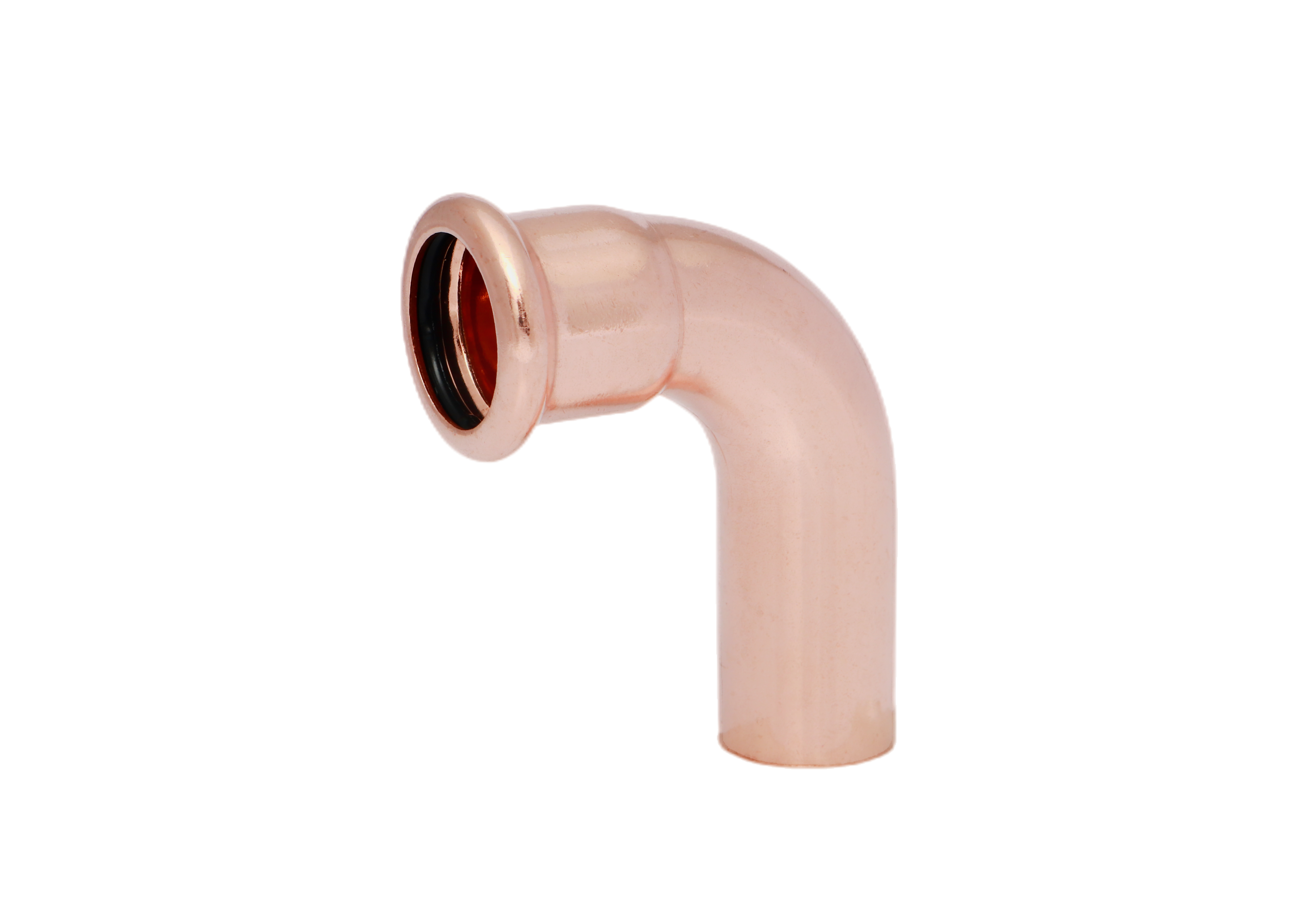
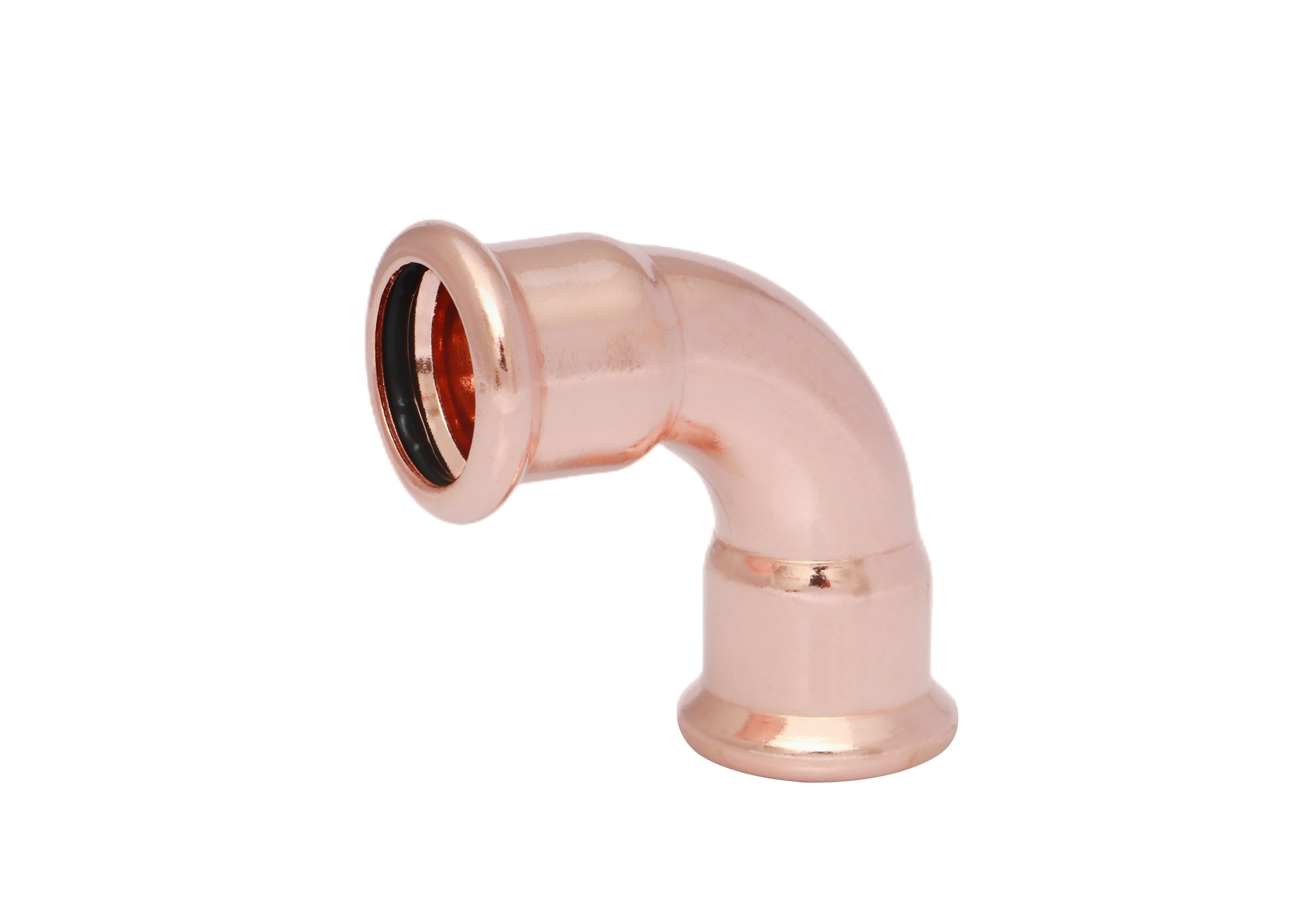
Copper press fitting with M profile-90° street elbow ftg x C
Discover our high-performance copper press fittings for reliable plumbing and piping. Our press connection system offers fast, leak-proof installation for copper tubes in water, heating, and air applications. View technical specs and dimensions.
-Material: Copper Alloy (CW602N)
-Sealing Element : EPDM O-ring
-Certifications : WRAS Approved
- Overview
- Recommended Products
Overview
Copper press fittings are widely recognized as one of the most advanced and efficient solutions in modern plumbing and piping systems. They are engineered to provide a fast, secure, and highly dependable method for connecting copper tubes without the complexity and risks associated with traditional joining techniques. Designed with professional installers in mind, these fittings deliver consistent performance and long-term reliability across a broad range of building applications.
Unlike conventional soldered connections, copper press fittings use a mechanical pressing method that forms a permanent seal within seconds. The system consists of a precision-machined fitting body, a durable EPDM sealing ring, and a compatible pressing tool. When the tool is activated, it applies controlled pressure to deform the fitting around the pipe, compressing the O-ring to create a tight, uniform, and leak-resistant connection. This process ensures high structural integrity while significantly simplifying installation procedures.
One of the key advantages of this technology is its ability to eliminate the need for heat-based work. Since no open flame, flux, or solder is required, installation becomes safer and more flexible, particularly in environments where fire risk must be minimized. This makes copper press systems highly suitable for use in occupied buildings, hospitals, hotels, and commercial facilities where safety regulations are strict and downtime must be avoided.
Copper press fittings are also highly versatile and can be used in numerous systems, including potable water supply networks, hydronic heating loops, chilled water distribution, and compressed air systems. Their adaptability allows engineers and contractors to standardize installation methods across multiple applications, improving efficiency and reducing training complexity.
In addition, the system supports faster project completion and improved labor productivity. Each connection can be completed in a matter of seconds, significantly reducing installation time on large-scale projects. Combined with its durability, corrosion resistance, and minimal maintenance requirements, copper press fitting technology offers a modern, cost-effective alternative to traditional pipe joining methods, meeting the demands of today’s high-performance construction standards.
Key Features & Benefits
Copper press fitting systems are engineered to deliver a highly efficient and modern approach to pipe installation, offering significant improvements in speed, safety, and overall project economics. One of the most notable advantages is rapid installation efficiency. With the use of a calibrated pressing tool, each joint can be completed in less than 10 seconds. This streamlined process dramatically reduces on-site labor requirements, allowing installation teams to complete larger volumes of work within shorter project timelines and improving overall construction productivity.
Another major benefit is the flame-free and safe working method. Since the system does not rely on soldering, brazing, or any form of open flame, it eliminates the need for hot work permits entirely. This not only simplifies project management but also greatly enhances safety on construction sites. The absence of heat-based operations makes it particularly suitable for confined spaces and occupied buildings such as hospitals, office complexes, hotels, and residential units, where minimizing fire risk and operational disruption is critical.
The system also ensures exceptional leak-proof integrity. Once pressed, the fitting forms a mechanically locked and permanently sealed joint that resists vibration, pressure fluctuations, and thermal expansion. This robust connection design helps maintain stable system performance over long service periods, reducing the likelihood of leakage-related maintenance or downtime.
In terms of application versatility, copper press fittings are compatible with both hard-drawn (rigid) copper tubing and soft (annealed) copper tubing. They fully comply with recognized international standards such as ASTM B88 and EN 1057, ensuring consistent quality and compatibility across global plumbing and HVAC projects.
Finally, the system is highly cost-efficient. By eliminating hot work requirements, reducing installation time, and minimizing insurance and safety compliance costs, copper press fittings help significantly lower overall project expenses. Additionally, faster installation cycles contribute to reduced project delays, making them a practical and economical solution for modern construction and infrastructure systems.
Technical Specifications
Parameter |
Specification |
Material |
Copper Alloy (CW602N) |
Sealing Element |
EPDM O-ring |
Sealing Material Temp. Range |
-20°C to +110°C |
Operating Pressure |
Max 16 Bar |
Standards |
AS3688,EN1057 |
Size Range |
15mm-54mm |
Certifications |
WRAS Approved |
Connection Method |
Cold press using a calibrated jaw tool |
Installation Guide
The installation process for copper press fittings follows a precise and standardized workflow designed to ensure maximum joint reliability, safety, and long-term performance. Each step contributes to creating a secure, leak-resistant connection that meets modern plumbing and HVAC requirements.
The procedure begins with cutting the copper tube. A professional tube cutter should be used to achieve a perfectly square and clean cut. A straight edge is essential because it allows the tube to align correctly within the fitting, ensuring even contact and preventing internal stress that could compromise the joint.
The next step is deburring and cleaning. After cutting, any sharp edges, internal fragments, or external burrs must be carefully removed. This step is critical because burrs can damage the internal sealing O-ring or prevent the tube from seating properly. A smooth, clean tube end ensures optimal sealing performance and protects the integrity of the fitting system.
Following this, the installer should mark the insertion depth. Each fitting has a defined insertion depth, and marking this distance on the tube serves as a visual guide. This helps confirm that the pipe is fully inserted into the fitting body, preventing partial insertion errors that could lead to leaks or weak joints.
Next is tube insertion. The pipe is pushed firmly and steadily into the fitting until it reaches the internal stop. Proper insertion ensures full engagement with the sealing components and mechanical structure inside the fitting.
The fifth stage is pressing the connection. The press tool is positioned accurately over the fitting, and the tool is activated to apply controlled radial force. This permanently compresses the fitting around the tube, forming a strong mechanical bond and sealing the joint.
Finally, verification is performed. Most fittings feature a built-in visual indicator that deforms during pressing, commonly forming a clear pressed profile. This provides immediate confirmation that the joint has been successfully completed and is ready for system operation.