EN
EN



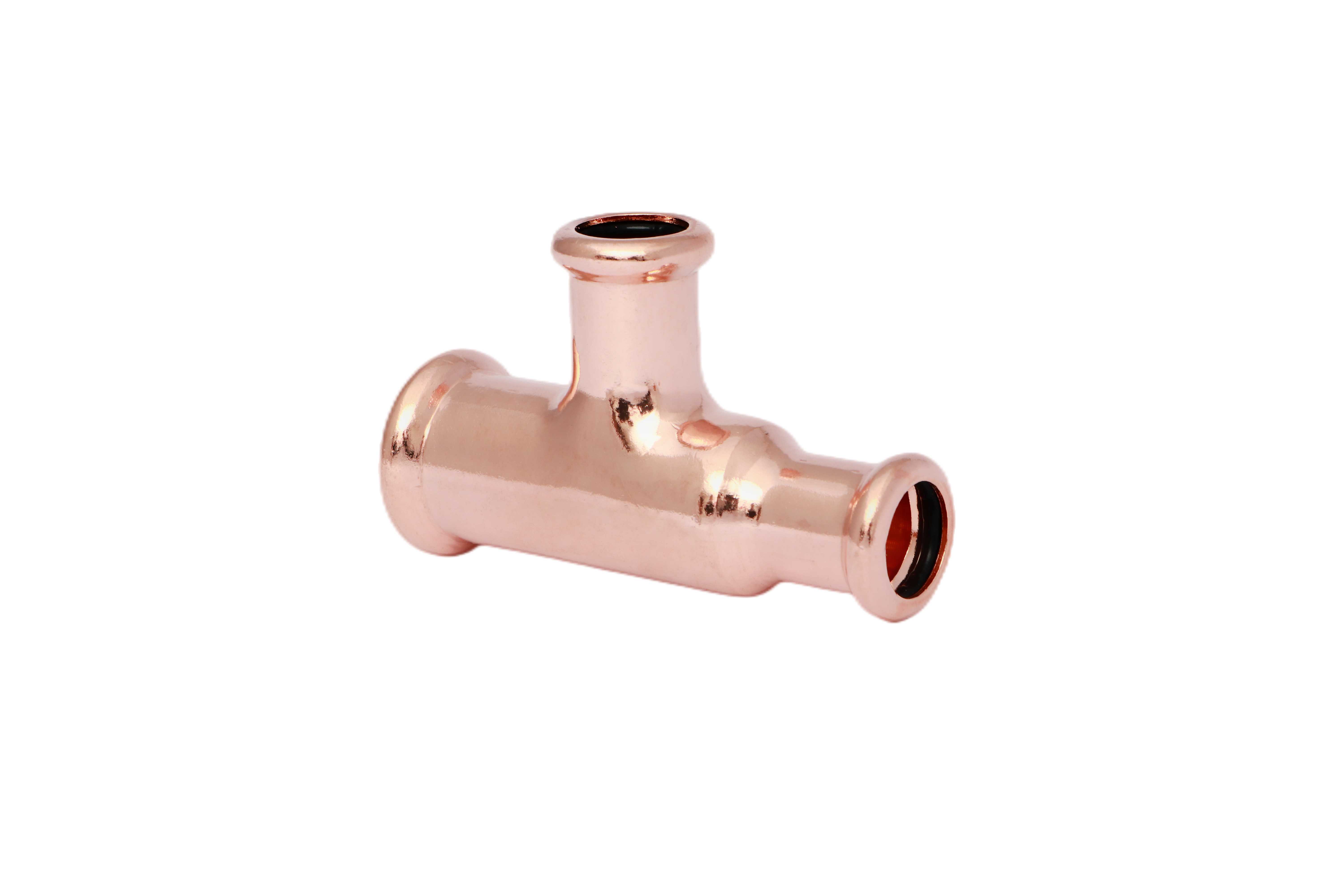
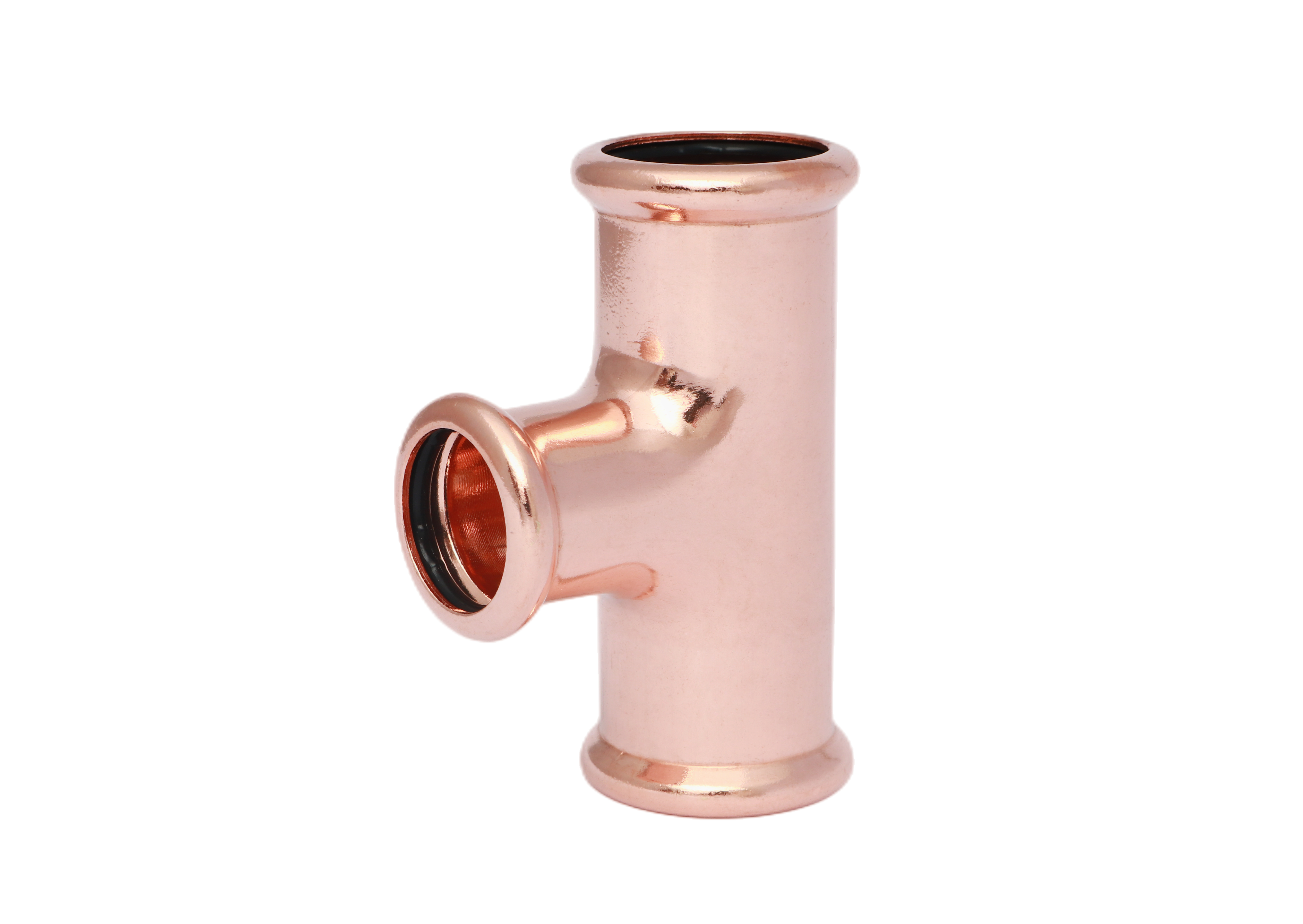
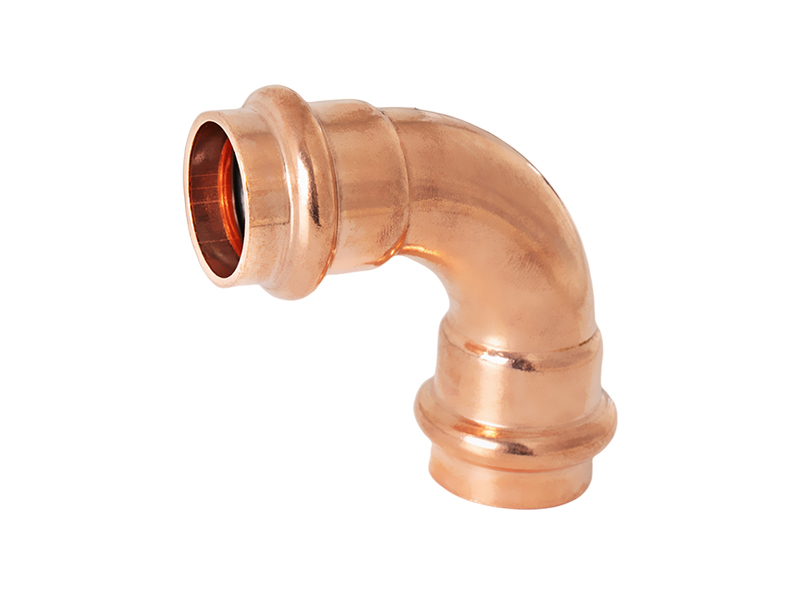
Copper press fitting with M profile-Reducing tee
Discover our high-performance copper press fittings for reliable plumbing and piping. Our press connection system offers fast, leak-proof installation for copper tubes in water, heating, and air applications. View technical specs and dimensions.
-Material: Copper Alloy (CW602N)
-Sealing Element: EPDM O-ring
-Sealing Material Temp. Range: -20°C to +110°C
-Operating Pressure: Max 16 Bar
-Standards: AS3688,EN1057
- Overview
- Recommended Products
Overview
Copper press fittings are an advanced mechanical joining system developed for modern piping infrastructure, offering a reliable alternative to traditional soldered or brazed connections. The system is designed to improve installation efficiency while maintaining high standards of safety, durability, and sealing performance in a wide range of engineering applications.
At the core of this technology is a precision-engineered fitting body combined with an elastomeric sealing element, typically an EPDM O-ring. During installation, a specialized pressing tool applies controlled radial compression to the fitting. This process permanently deforms the metal structure around the inserted copper tube, creating a secure mechanical lock while simultaneously activating the sealing interface. The result is a consistent, pressure-resistant, and leak-proof connection.
From a system perspective, copper press fittings streamline the entire installation process. By eliminating the need for heat-based joining methods, they remove the complexity associated with soldering, including fire safety precautions, ventilation requirements, and permit restrictions. This allows installation work to proceed in environments where open flame operations are restricted or not permitted, significantly expanding usability across different job sites.
The technology is widely applied in potable water systems, ensuring safe and hygienic water distribution in residential and commercial buildings. It is also used in hydronic heating systems where stable thermal transfer is required, as well as chilled water networks in HVAC systems that demand reliable long-term performance. In addition, compressed air systems benefit from the airtight sealing and vibration resistance provided by press-fit connections.
Another key advantage lies in installation efficiency. Because each joint can be completed in a matter of seconds, project timelines are significantly shortened and labor requirements are reduced. Combined with corrosion resistance, long service life, and minimal maintenance needs, copper press fittings offer a highly efficient and cost-effective solution for modern piping system design and construction.
Key Features & Benefits
Copper press fitting systems are designed to deliver a high-performance balance of speed, safety, reliability, and cost efficiency in modern piping installations. Their engineering structure supports consistent results across a wide range of construction environments.
Installation Speed Advantage
One of the most notable features is the extremely fast installation process. Each joint can be completed in under 10 seconds when using a compatible pressing tool. This rapid connection method significantly reduces on-site labor time, improves workflow efficiency, and allows large piping systems to be installed within shorter project schedules. As a result, overall construction productivity is greatly enhanced.
Improved Safety Conditions
The system operates without the need for open flames, soldering, or brazing. Since no heat is involved, hot work permits are not required, reducing administrative procedures and safety risks. This makes the system particularly suitable for sensitive environments such as hospitals, schools, hotels, office buildings, and occupied residential spaces where fire prevention is critical.
Reliable Sealing Performance
Each press connection forms a permanent mechanical bond between the fitting and the copper tube. The joint is engineered to resist vibration, internal pressure variations, and thermal expansion. This ensures long-term sealing stability and minimizes the risk of leakage, contributing to a more durable and maintenance-free piping system.
Material and Standard Compatibility
Copper press fittings are compatible with both rigid (hard-drawn) and soft (annealed) copper tubes. They comply with internationally recognized standards such as ASTM B88 and EN 1057, ensuring consistent quality, dimensional accuracy, and system compatibility across different applications.
Cost Reduction Benefits
By eliminating hot work requirements and reducing installation time, the system significantly lowers labor costs and project expenses. It also reduces insurance requirements and minimizes downtime, making it a highly cost-effective solution for modern construction and engineering projects.
Technical Specifications
Parameter |
Specification |
Material |
Copper Alloy (CW602N) |
Sealing Element |
EPDM O-ring |
Sealing Material Temp. Range |
-20°C to +110°C |
Operating Pressure |
Max 16 Bar |
Standards |
AS3688,EN1057 |
Size Range |
15mm-54mm |
Certifications |
WRAS Approved |
Connection Method |
Cold press using a calibrated jaw tool |
Installation Guide
Copper Press Fitting Installation Procedure (Field Execution Guide)
To ensure a secure, durable, and leak-free connection, copper press fittings must be installed following a precise field procedure. This structured workflow helps maintain consistent installation quality across plumbing and HVAC systems.
Phase 1: Pipe Preparation
Cutting Operation
Begin by cutting the copper tube using a professional tube cutter. The cut must be clean, straight, and perpendicular to the pipe axis. Proper geometry at this stage ensures correct alignment and optimal sealing contact inside the fitting.
Deburring & Surface Conditioning
After cutting, remove all internal and external burrs. This prevents damage to the sealing O-ring and ensures smooth pipe insertion. The pipe end should be clean, uniform, and free from any sharp metal edges or debris.
Phase 2: Positioning Setup
Insertion Depth Marking
Measure and clearly mark the required insertion depth on the pipe surface. This visual reference guarantees that the tube is fully seated inside the fitting before pressing begins.
Pipe Insertion
Insert the copper tube into the fitting until it reaches the internal stop. Full insertion ensures proper alignment with the sealing zone and prepares the joint for compression.
Phase 3: Pressing Execution
Press Tool Application
Position the press tool jaws accurately around the fitting body. Ensure correct alignment to avoid uneven force distribution.
Press Activation
Activate the tool to apply controlled radial pressure. The fitting is permanently deformed around the tube, forming a strong mechanical lock while compressing the internal sealing element to create a tight, stable joint.
Phase 4: Quality Confirmation
Final Inspection
After pressing, check the connection carefully. Most fittings include a built-in deformation profile that visually confirms a completed press. This step ensures installation integrity and confirms the system is ready for operation.
This structured procedure ensures high installation reliability, safety, and long-term performance in all copper press fitting applications.