EN
EN



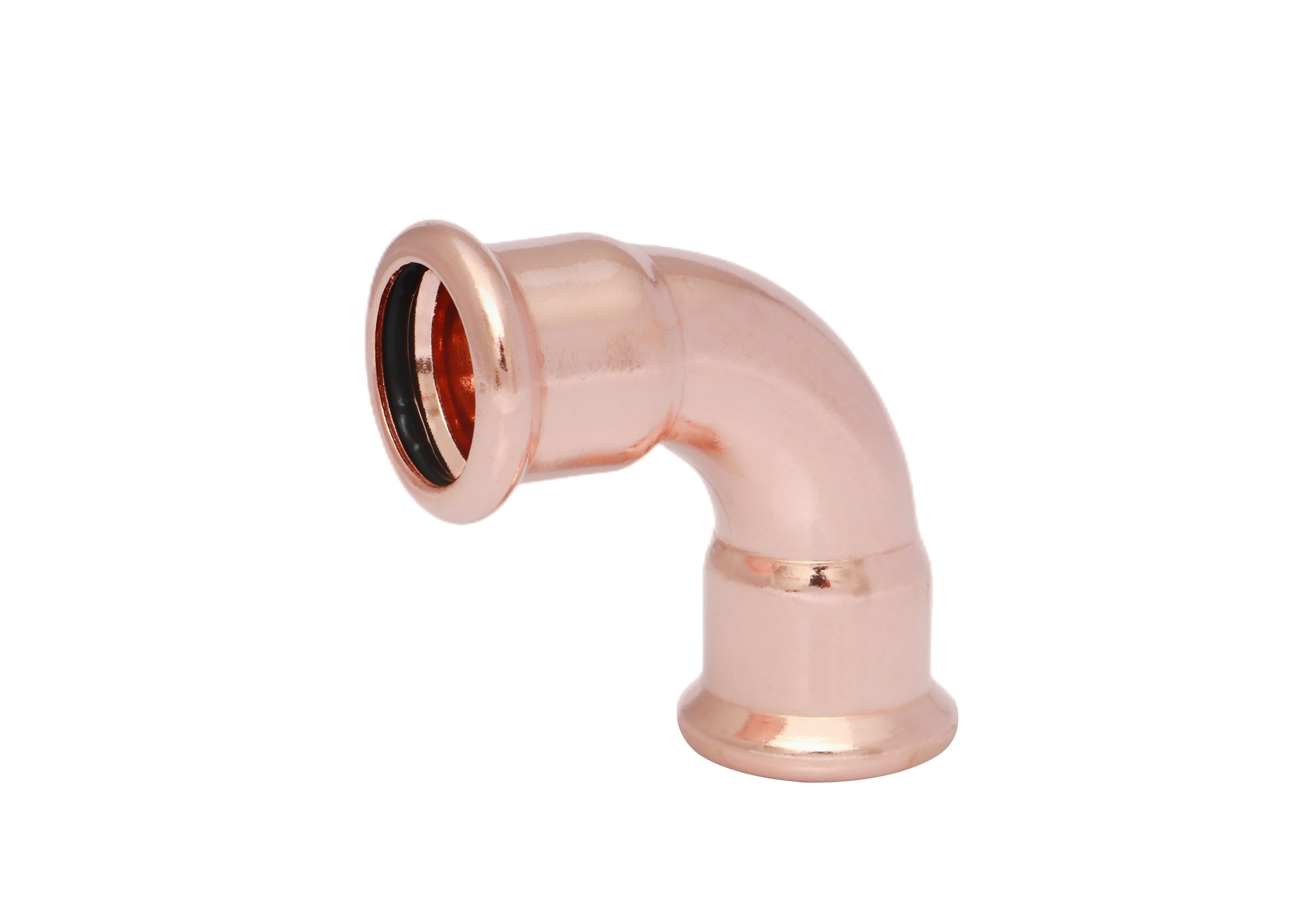
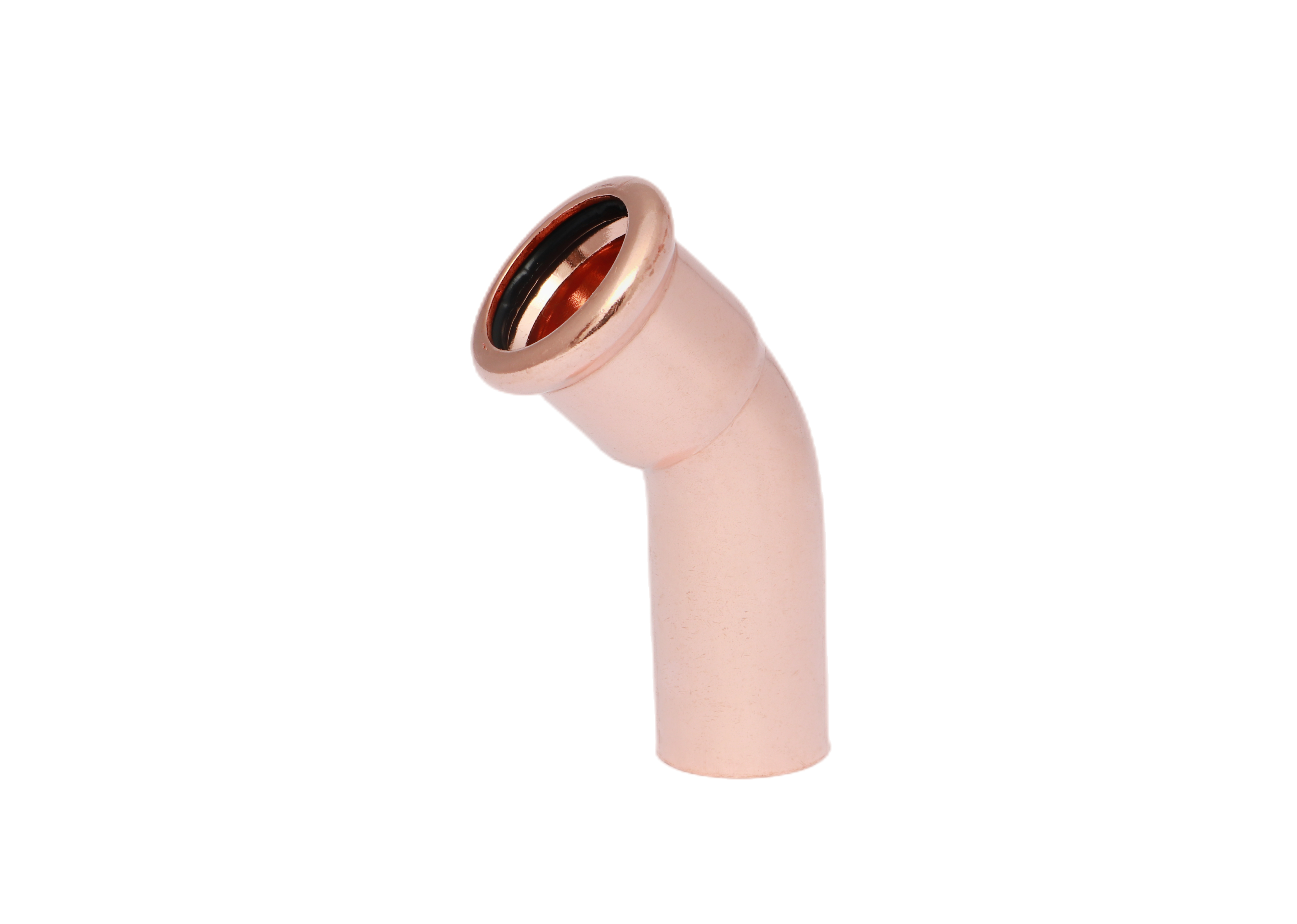
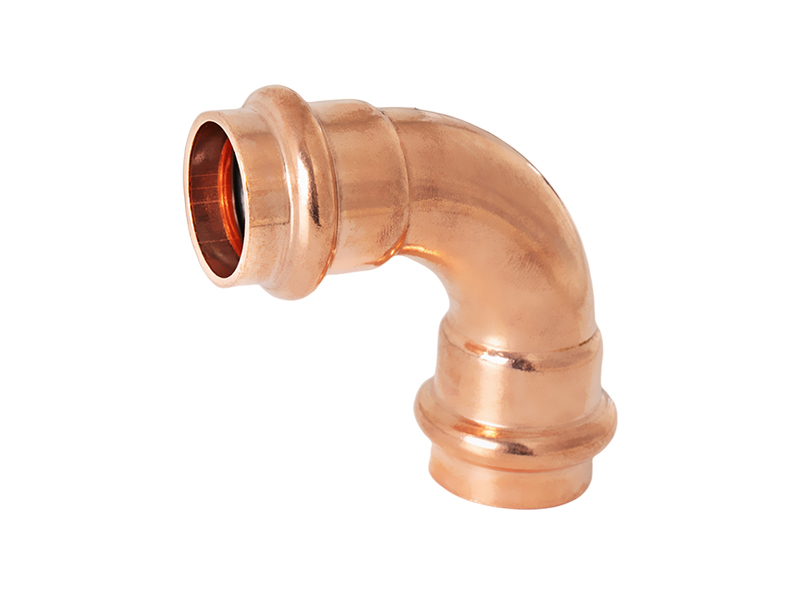
Copper press fitting with M profile-90° elbow CxC
Discover our high-performance copper press fittings for reliable plumbing and piping. Our press connection system offers fast, leak-proof installation for copper tubes in water, heating, and air applications. View technical specs and dimensions.
-Material: Copper Alloy (CW602N)
-Sealing Element : EPDM O-ring
-Certifications : WRAS Approved
- Overview
- Recommended Products
Overview
Copper press fittings are an advanced generation of piping connection technology developed to meet the needs of modern plumbing, HVAC, and industrial systems. They offer a highly efficient alternative to traditional joining methods, enabling copper tubes to be connected quickly, safely, and with exceptional consistency. By removing the need for heat-based processes, these fittings significantly simplify installation while maintaining strong mechanical performance and long-term sealing reliability.
The core design of a copper press fitting relies on precision engineering and controlled deformation. Each fitting is manufactured to strict tolerances and incorporates a durable sealing element, typically an EPDM O-ring, which ensures a secure and stable connection under varying operating conditions. During installation, a specialized pressing tool applies uniform radial force to the fitting body, permanently compressing it around the pipe. This process locks the tube in place while simultaneously activating the sealing system, resulting in a joint that is both mechanically robust and leak-resistant.
Copper press fittings are widely used across multiple building systems due to their versatility and reliability. In potable water systems, they help ensure safe and hygienic water delivery. In hydronic heating applications, they support efficient thermal circulation and system stability. They are also commonly applied in chilled water networks and compressed air systems, where consistent pressure handling and airtight sealing are essential. Their adaptability makes them suitable for residential, commercial, and light industrial projects alike.
One of the most important advantages of this technology is its contribution to improved job site safety. Since no open flame, solder, or flux is required, installation risks are significantly reduced, making it possible to work in environments where hot work is restricted. Combined with reduced labor time, minimal maintenance requirements, and high installation efficiency, copper press fittings provide a dependable and cost-effective solution that aligns with modern construction standards and performance expectations.
Key Features & Benefits
Copper press fitting systems are engineered to deliver a modern, highly efficient approach to copper piping installation, focusing on speed, safety, and long-term system stability. They are widely adopted in professional construction environments where reliable performance and reduced installation complexity are essential.
A key advantage is ultra-fast installation speed. With the use of a compatible press tool, each connection can be completed in approximately 10 seconds or less. This rapid joining process significantly improves on-site efficiency, allowing installers to complete large-scale piping networks in a much shorter timeframe. As a result, labor productivity is greatly enhanced and overall project scheduling becomes more manageable.
Another important feature is the flame-free and regulation-friendly installation method. Because the system does not require soldering, brazing, or any form of open flame, it eliminates the need for hot work permits entirely. This not only simplifies compliance procedures but also enables safe installation in environments where fire risk must be strictly controlled, such as hospitals, schools, hotels, and occupied commercial buildings.
The system also provides high-performance leak resistance. Each pressed joint forms a mechanically locked and permanently sealed connection designed to withstand vibration, pressure fluctuations, and thermal expansion. This ensures stable long-term operation and reduces the likelihood of maintenance issues, helping to extend the overall service life of the piping system.
In addition, copper press fittings offer broad material and application compatibility. They are suitable for both hard-drawn (rigid) and soft (annealed) copper tubing, fully complying with internationally recognized standards such as ASTM B88 and EN 1057. This ensures consistent installation quality across different project types and global engineering requirements.
Finally, the system is highly cost-efficient. By eliminating hot work requirements, reducing labor time, and minimizing insurance and downtime costs, copper press fittings help significantly lower total project expenses while improving installation safety and operational efficiency.
Technical Specifications
Parameter |
Specification |
Material |
Copper Alloy (CW602N) |
Sealing Element |
EPDM O-ring |
Sealing Material Temp. Range |
-20°C to +110°C |
Operating Pressure |
Max 16 Bar |
Standards |
AS3688,EN1057 |
Size Range |
15mm-54mm |
Certifications |
WRAS Approved |
Connection Method |
Cold press using a calibrated jaw tool |
Installation Guide
The correct installation of copper press fittings follows a disciplined, step-by-step procedure designed to ensure precision, safety, and long-term joint reliability. Each operation must be performed carefully to achieve a fully sealed and mechanically sound connection suitable for professional plumbing and HVAC systems.
The process starts with tube cutting. The copper pipe should be cut using a professional-grade tube cutter to achieve a clean, square end. A precise 90-degree cut is essential because it allows the tube to sit evenly inside the fitting, ensuring proper alignment and uniform sealing pressure during pressing.
The next stage is deburring and edge finishing. After cutting, both internal and external burrs must be completely removed. Any sharp edges or metal fragments can interfere with the sealing O-ring or prevent full insertion of the pipe. A properly deburred tube ensures smooth engagement with the fitting and protects internal components from damage.
Following this, the installer performs depth marking. The insertion depth specified by the fitting manufacturer is measured and marked clearly on the outside of the tube. This reference line acts as a visual guide to confirm that the pipe is fully inserted to the correct position before pressing begins.
The fourth step is pipe insertion. The copper tube is pushed firmly into the fitting until it reaches the internal stop point. This ensures full contact between the pipe and the sealing system, creating the foundation for a secure mechanical joint.
Next is the pressing operation. The press tool is positioned accurately over the fitting and activated. The controlled compression force permanently deforms the fitting body around the pipe, locking it in place while simultaneously activating the sealing element to form a tight, vibration-resistant connection.
Finally, inspection and confirmation are carried out. Most fittings feature a built-in visual indicator, such as a pressed contour or deformation pattern, which confirms successful installation. This final check ensures the joint meets quality standards before the system is put into service.