
 EN
EN


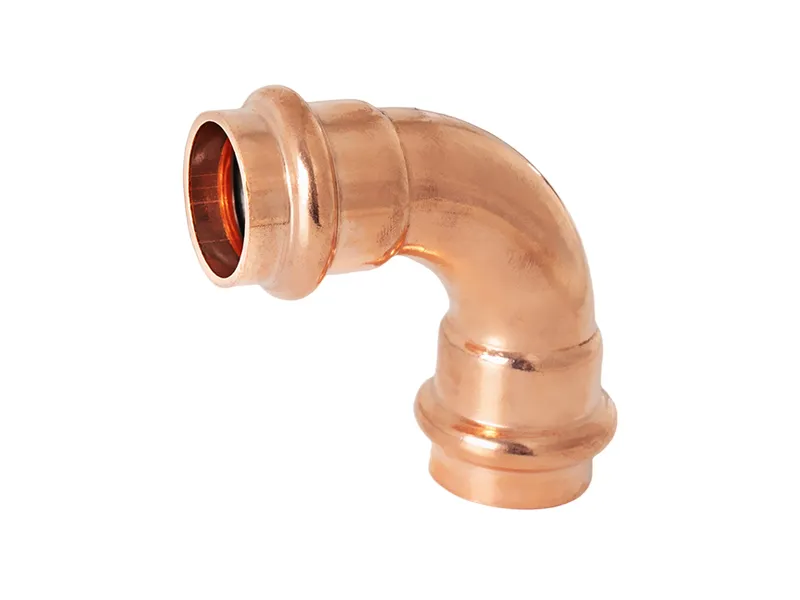
A site bent its own copper to save the fitting cost and paid for it in a cracked turn two winters later. The bend had thinned at the outside of the curve, and the freeze cycle opened the weak spot. A copper elbow made on a matched die keeps the wall through the sweep, so the joint outlasts the line instead of failing where the pipe was stretched by a field bend.
When the Field Bend Failed
The Crack at the Turn
Curvatura spontanea flevit extra radium angustum post gelum durum. Alternativa de cubito cupri tenuisset murum, sed locus elegit curvaturam minus pretiosam et amisisse eam in puncto tenuissimo. Flexus sine caleo factus tenuat ubi stressus congregatur, et fuga apparuit exacte ubi distentio erat maxima in curva.
Cur Curvatura Tenuavit
Flexio frigida distendit parietem exteriorem et comprimit interiorem. Cubitus cupri formatum in caleo regit hanc tenuationem, dum flexus in loco reliquit eam ad sensum operariorum. Resultatum fuit flexus cum minus metalli quam tubus cui iungebatur, itaque gelum invenit locum et aperuit eum ubi systema minus poterat ferre interruptionem in loco.
Periculum in Methodo Flexus
Amisso Pariete Ultra Limitem
Radius too tight causes rapid wall thinning. A copper elbow formed with a proper die remains within allowable wall reduction limits, but a field bend may exceed those limits while still appearing acceptable. Measuring the thinnest wall point after bending detects thinning before the line is pressurized; approved drawings specify the minimum radius the wall can withstand under pressure.
Uneven Annealing Due to Heat
Bending with heat risks localized softening and inconsistent grain structure. A copper elbow drawn and annealed under controlled conditions maintains uniform grain; a torch-bent elbow develops hard spots. Mixed grain structure leads to cracking at brazed joints and leakage under thermal cycling—defects a cool pressure test may miss until summer heat stresses rooftop piping.
How the Elbow Maintains Wall Integrity
The Die and the Bend Radius
Elbow de qualitate sunt formati super un matrițe adaptat pro un radius verus. Un elbow de cupru fabricat in iste modo conserva le spessore del parietes per le curva, ergo non se attenua e non falli ubi le stress se concentra. Le matrițe correcte anque replica le forma, ergo omne piece in le lotto se adapta al mesme manifold sin necessitar re-travailio durante le installation.
Le Curva e Le Fluxu
Un radius generose mantene le fluxu lisu e le stress basse. Un elbow de cupru con un curva strette e irregulare perturba le fluxu e accumula depositos in le curva. Le geometria melior anque brasat plus nette, quia le adaptation es consistent e le interstitio que le material de union debe coprir resta intra le intervallo pro quo le junctura fue disignate pro sustiner sub le pression del sistema.
Standardes e Disciplina del Selection
What the References Expect
ASTM B88 et B280 nomment le tube auquel le coude doit correspondre ; ASME B16.22 couvre la géométrie et l’épaisseur de paroi des raccords forgés. Un coude en cuivre acheté selon ces normes est livré avec un dossier de lot traçable qui précise le rayon. ISO 9001 atteste que l’usine maîtrise le procédé, et la commande doit indiquer la matrice et la classe afin d’assurer la traçabilité sur site.
Un choix pratique de fiabilité
Adapter la méthode à la conduite : un coude en cuivre là où l’épaisseur de paroi doit rester constante, un cintrage sur chantier uniquement là où le rayon est doux et vérifié. Un coude en cuivre doit être accompagné du certificat et d’un dossier de lot accepté par l’inspecteur. Booming fournit des nuances documentées et des rayons courants, permettant ainsi à l’acheteur de choisir la fiabilité via une pièce enregistrée plutôt qu’une simple espérance reposant sur l’équipe de cintrage.
Un cotinetum cupreum debet servare parietem per curvam ubi flexus coniungitur cum tubo recto. Un cotinetum cupreum quod subtiliatur in curva perdit aquam ubi gelu aperit locum infirmum in linea. Mensura puncti subtilissimi post formationem servat cotinetum cupreum intra specificatum, et exemplar quod emptor inspicit confirmat quod morsus ad radium est dispositus quem systema requirit sub pressione omni hieme.
Bore purus protegit fluxum quem cotinetum cupreum portat per collem in opere. Cotinetum cupreum cum interiore aspero turbat fluxum et colligit depositum in curva sub onere. Specificatio finitionis et examinatio unius cotineti cuprei ex copia servat lineam puram, et examen commissionis praemiat curam cum cursu leni quem operator sentit ubi flexus coniungitur cum pompa in pavimento.
A copper elbow drawn and annealed under control seals like the tube it joins through thermal cycling. A copper elbow from a torch-bent run hardens in spots and cracks at the braze under swing. The lot file should record the anneal so the inspector sees the copper elbow was processed completely, and the joint the crew brazes holds through the start, run, and shutdown the system drives each day on site.
Booming stocks common radii and documents the grade for the copper elbow a job needs on the schedule. A copper elbow ordered with the certificate, not after, keeps the critical path short and the date real. The buyer plans the copper elbow against a queue the supplier shares, so the install meets the deadline instead of slipping when the die is busy on another line in the plant.
Ordo pro cotono curvato nominat radius, parietem, alligamentum, et finitionem antea pro aedificatoribus. Cotono curvatus specificatus cum isto particulari iungitur ordini sine difficultate et mittitur sub numero in quo planner confidit. Recensendo fasciculum ante emissionem confirmatur cotono curvatus conformare descriptum, et paletta quam aedificatores aperiunt convenit ad manifolium sine reoperatione quam specificatio vaga cogit in tempore installationis activae.
Quaestiones Frequenter Rogatae
Suntne cotoni curvati magis fideles quam tubuli curvati in loco?
Cum paries debet manere verus, ita est. Cotono curvatus formatum in matrice congruente servat crassitudinem per curvam, dum curvatura in loco attenuat extra curvam. Pars ex matrice superat lineam potius quam deficiat ubi tubulus distendebatur, et fasciculus probat radius quem paries formatus est ut teneat sub pressione.
Cur curvatura in loco attenuat parietem?
Cold bending stretches the outer wall and compresses the inner one, and a tight radius sheds metal fast. A copper elbow from a proper die controls that loss, but a field bend leaves it to feel. The thinnest point after the bend is where the freeze opens the joint, so measuring it catches the shortfall before the line is charged.
Does the bend radius affect reliability?
It sets how much wall the turn keeps. A copper elbow with a generous radius holds more metal and lower stress than a tight field bend. The approved drawing should name the radius the wall can survive, and the lot file should record it so the inspector confirms the part was formed inside the safe range under test.
Can heat bending cause other problems?
Yes, it risks a soft, uneven grain from uneven anneal. A copper elbow drawn and annealed under control keeps a uniform structure, while a torch-bent run hardens in spots. The mixed grain cracks at the braze under thermal cycling, and a cool test may miss it until summer loads the line and the weak joint finally opens on site.
Which standards cover a sound copper elbow?
ASTM B88 and B280 name the tube; ASME B16.22 covers the elbow geometry and wall. A copper elbow to these marks arrives traceable, and ISO 9001 shows the plant controls the process. The lot file should name the radius and the class, so the engineer confirms the part before the joint is brazed and charged.
Should the supplier document the elbow?
Elige un proveedor que suministre juntos el certificado, el radio y el archivo de lote. Un codo de cobre adquirido sin ese registro obliga al comprador a adivinar el espesor de la pared y conlleva el riesgo de una incompatibilidad. Booming ofrece grados documentados y radios comunes, por lo que la elección es la fiabilidad de una pieza registrada, no la esperanza depositada en el equipo de doblado del taller.